by Richard Moore
I have been fortunate, having found the texts and people that I have. In my journey to discover the process of French Polishing, and we will cover more on that later.
I would like share a brief history of and uses of Shellac while we mix some blonde shellac with a couple resins added for durability.
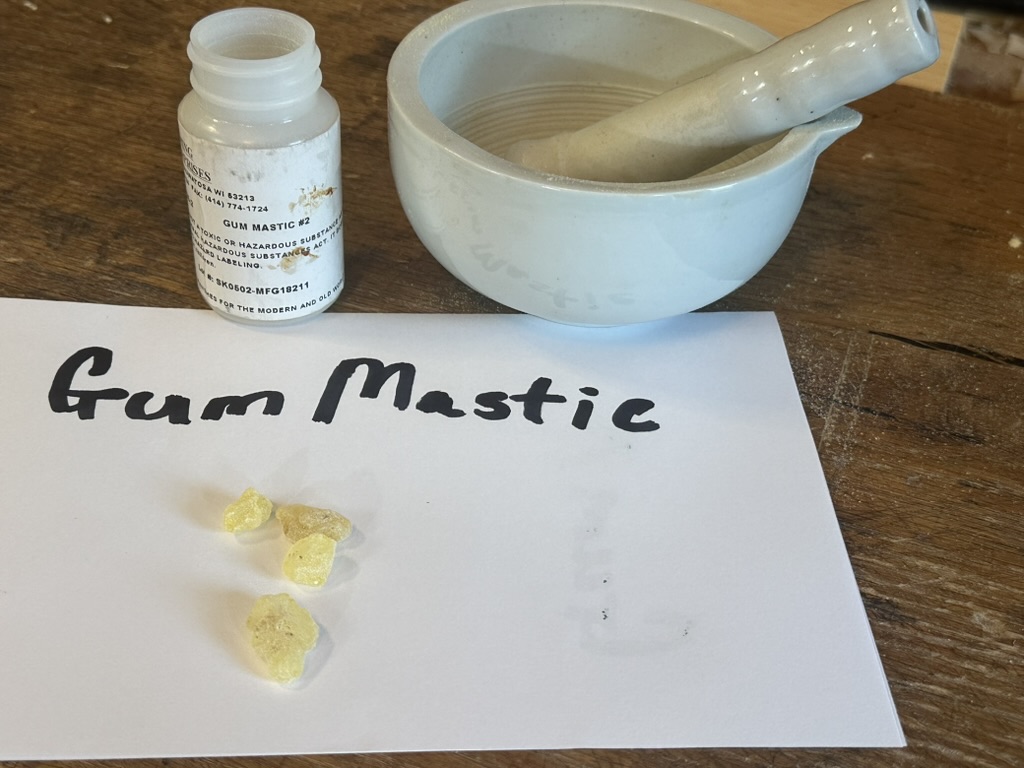
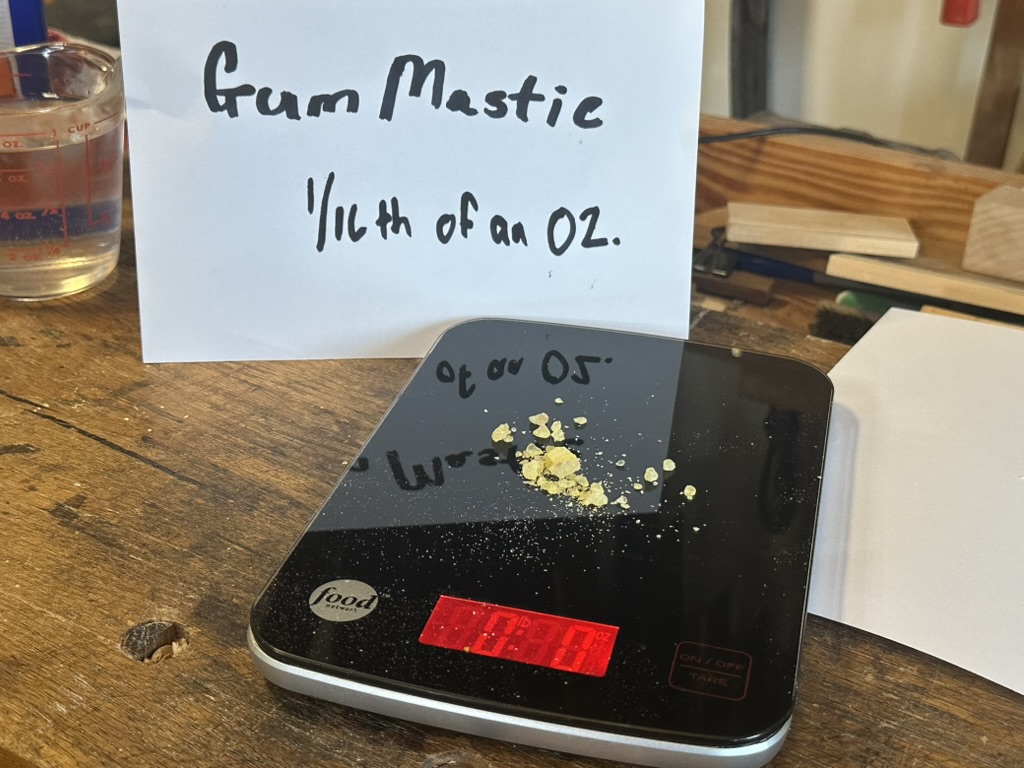
The resins are gum Arabic and gum mastic. These resins added to a two pound cut of shellac will make a more durable varnish than just shellac alone.
From what I have found in texts available Shellac has been used throughout Asia Minor, the Mediterranean and migrating beyond for over three thousand years. In one text I read an entire palace in India was built from dried shellac. Through time including the twentieth and into the twenty first centuries shellac is used in food product coatings, medication coatings, mold making, artist painting, art preservation, motor winding’s, electrical components, music records and many other applications other than furniture finishing. Formulas for paint have been translated from texts in Italy dating back to around the 12th century. The term Varnisher as a profession was first used separate from Joiner or Craftsman around that time in Italy. The process of French Polishing evolved in the early 19th century and is rumored to have been introduced to the French by the Dutch and then popularized in England by two brothers who migrated to England from France. This process originated when European craftsmen were trying to imitate the oriental lacquer of many imported items. What they did not know at the time was it was related to shellac. From this many formulations were created and many processes were used to create what we know today as French Polish. At one time Shellac; was the main finish used in the furniture and the building industry. It fell out of favor shortly after WWI when Nitrocellulose Lacquer was developed as cheaper alternative to Shellac. However, Shellac is still a widely used product in the world today.__
I had been trying for years to figure out French Polishing with limited success. Then one day as chance would have it, I was at a business in High Point when one of the managers there suggested I visit an antique store in one of the old factories in town. He stated that may be someone I’d like to meet there. So I wondered in and what I found was a gentleman French Polishing a table. I stood and watched for several minutes and then asked a couple questions and we started a conversation and introduced ourselves. His name is Simon and was working for one of the film companies in the states but lives in Liverpool. From there I went and purchased a six pack of beer and we spent several hours polishing a table together. It was a pleasure to spend time with someone willing to give of themselves. He showed me the proper way to make a rubber and load it. He gave me ways to judge my progress. It’s still not perfect but it’s a great start. Along with the instruction he turned me on to a couple of books to read and study. The first is The French Polisher’s Handbook. It was written by Perceval Marshall of London around 1910 and is available from shellac.net as a republication. It’s a great read with a lot of information that is enlightening about French Polishing. The second book on the subject can be found in the Project Gutenberg, www.Gutenberg.org. French Polishing and Enameling by Richard Bitmead, from its fourth edition around 1910. This book goes into great detail of formulas for stain, polish, and paints. It covers all of the processes involved as well. I haven’t completely read it yet but it’s been a great resource. He also turned me on to a YouTube channel Gilboy’s. This gentleman apprenticed in the early eighties as a finisher. Everything that Simon showed me is in the videos as well. So to sum up this intro, I’m a student of this process and medium. I haven’t mastered it completely but I’m getting there.
Shellac is measured by the term pound cut. This means for a two pound cut shellac is two pounds of shellac flakes to one gallon of alcohol. Below is a chart of different dilutions of shellac at different volumes.
To put it plainly, I only make enough to finish the project or projects I’m working on. My preferred mix is a two pound cut which I thin down to a one pound cut as I use the polish. You can always dilute a mix. I use other resins to add strength to the polish. These added elements make the polish more durable to abrasive items like keys, books, things you display and can be moved across or bumped into the surface. These added ingredients do not protect from alcohol or other hot solvents. For the upside this finish is fairly easy to repair. Personally I feel that for most items I build that shellac is a great goto finish.
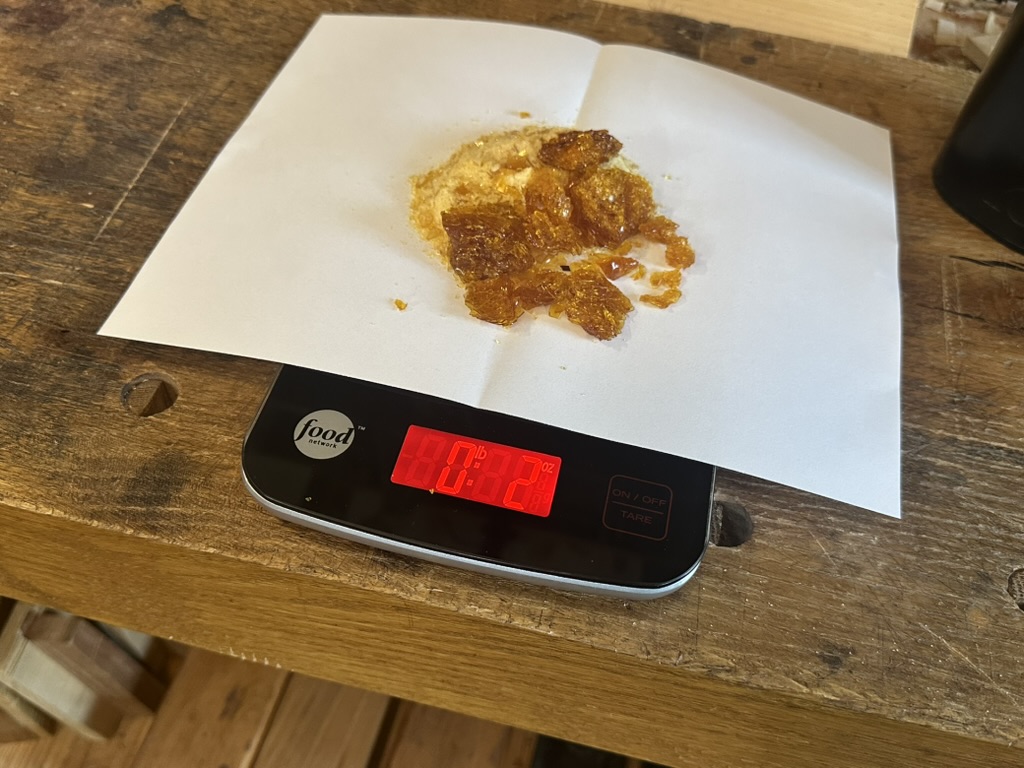
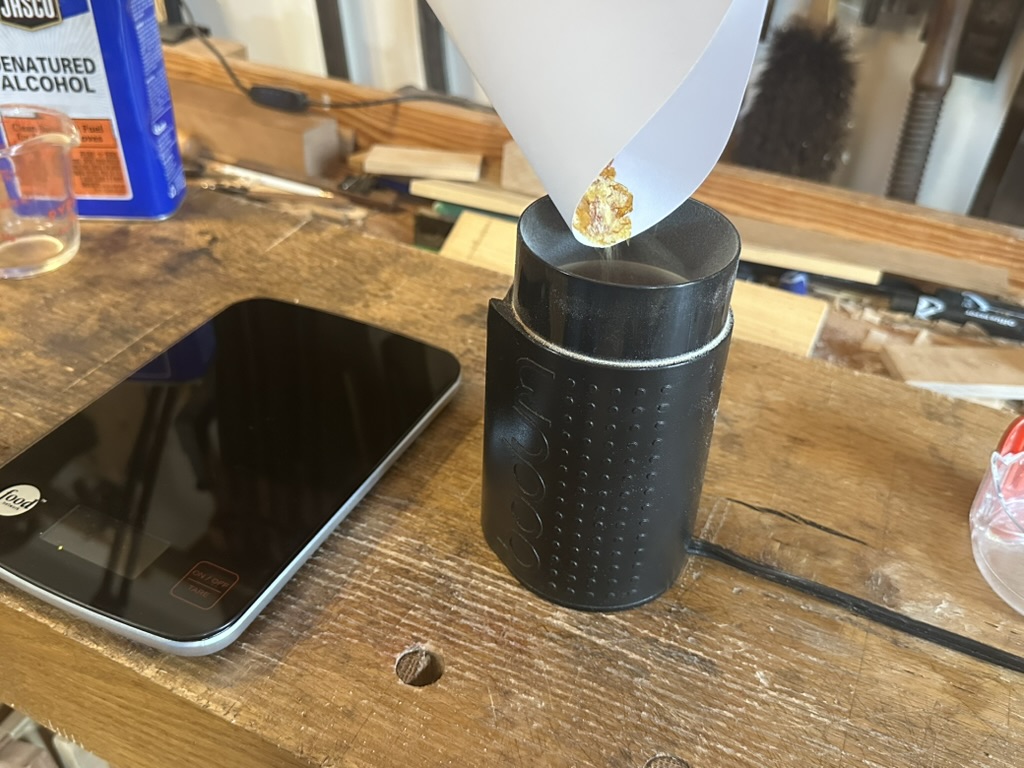
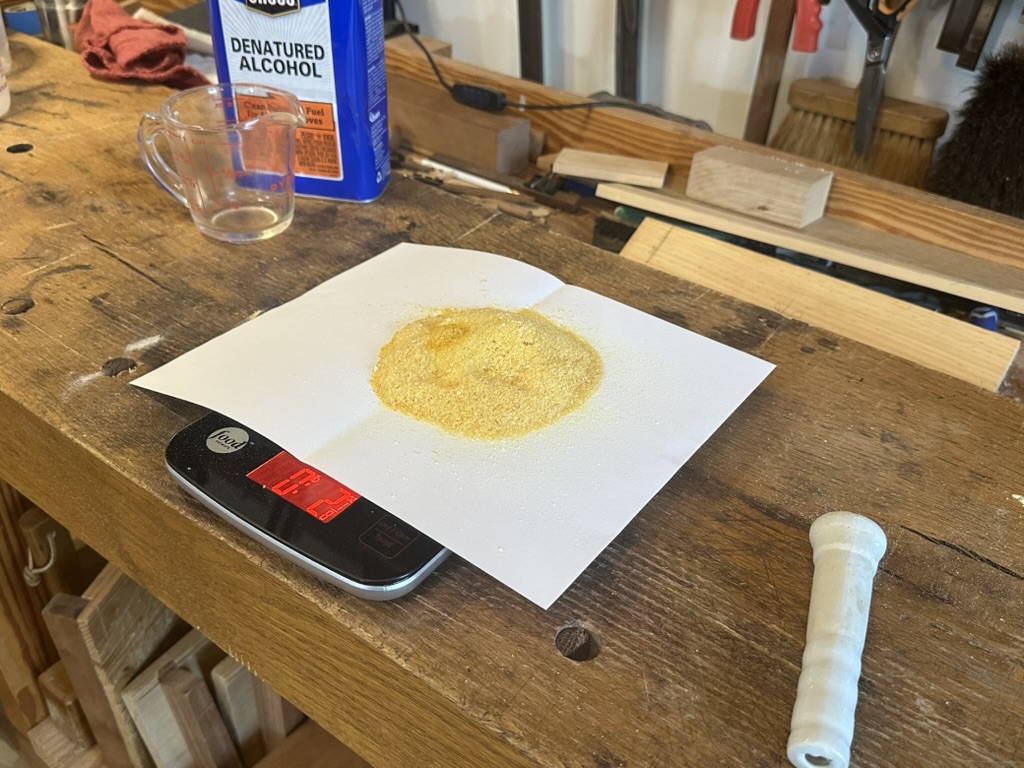
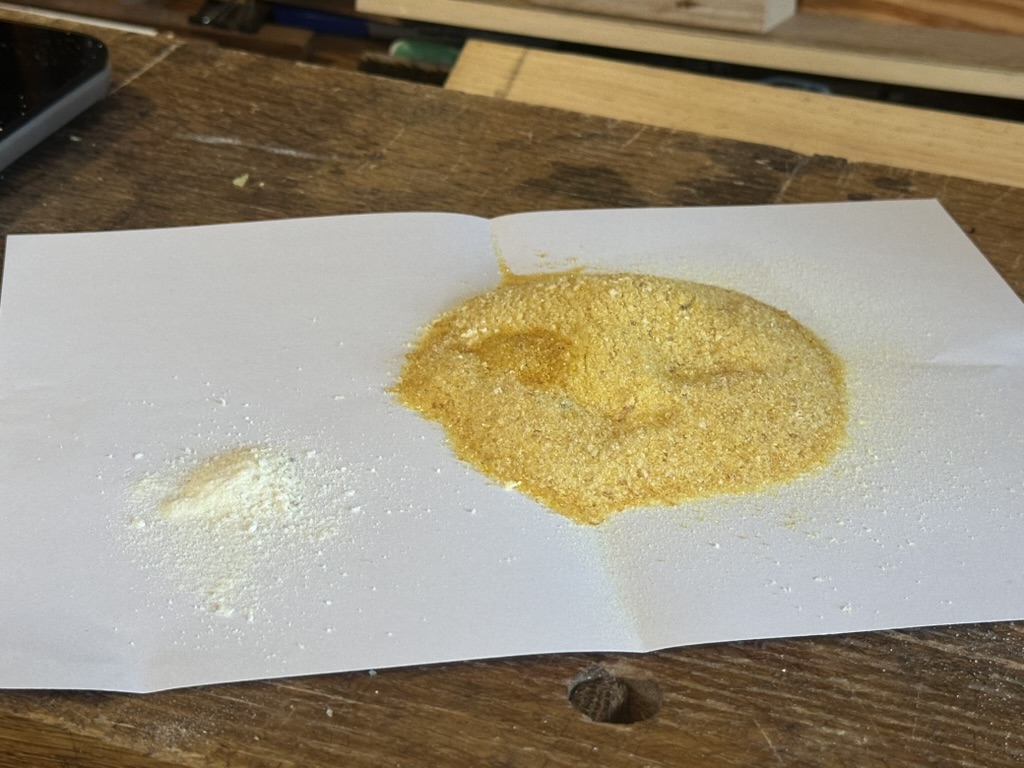
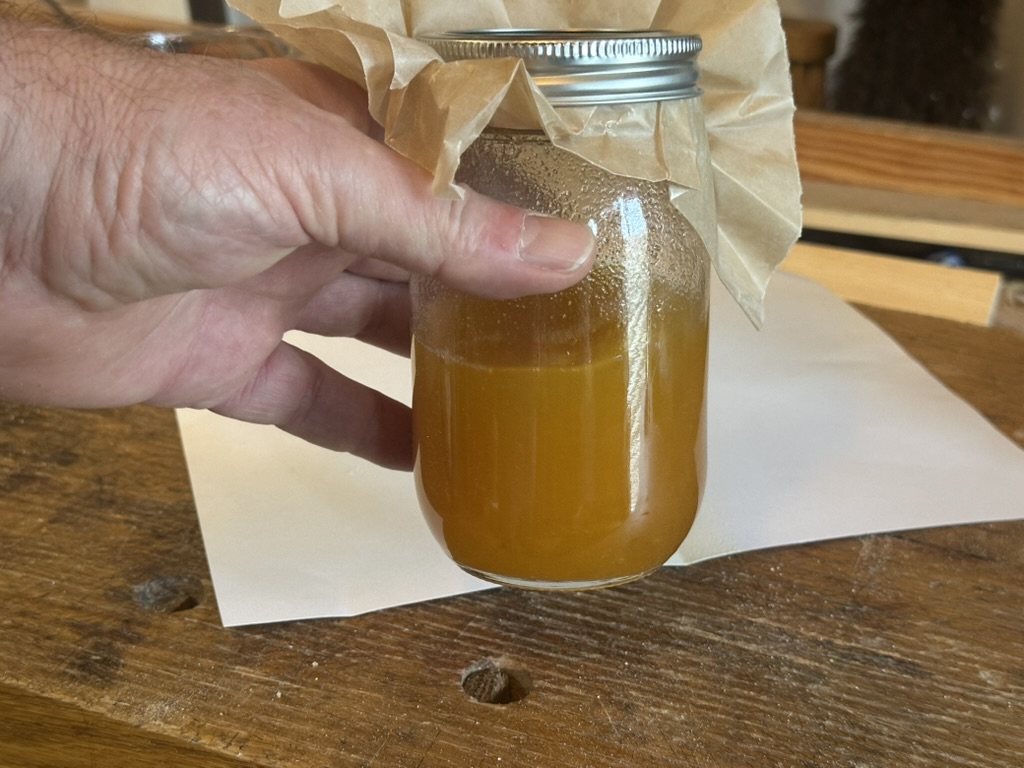
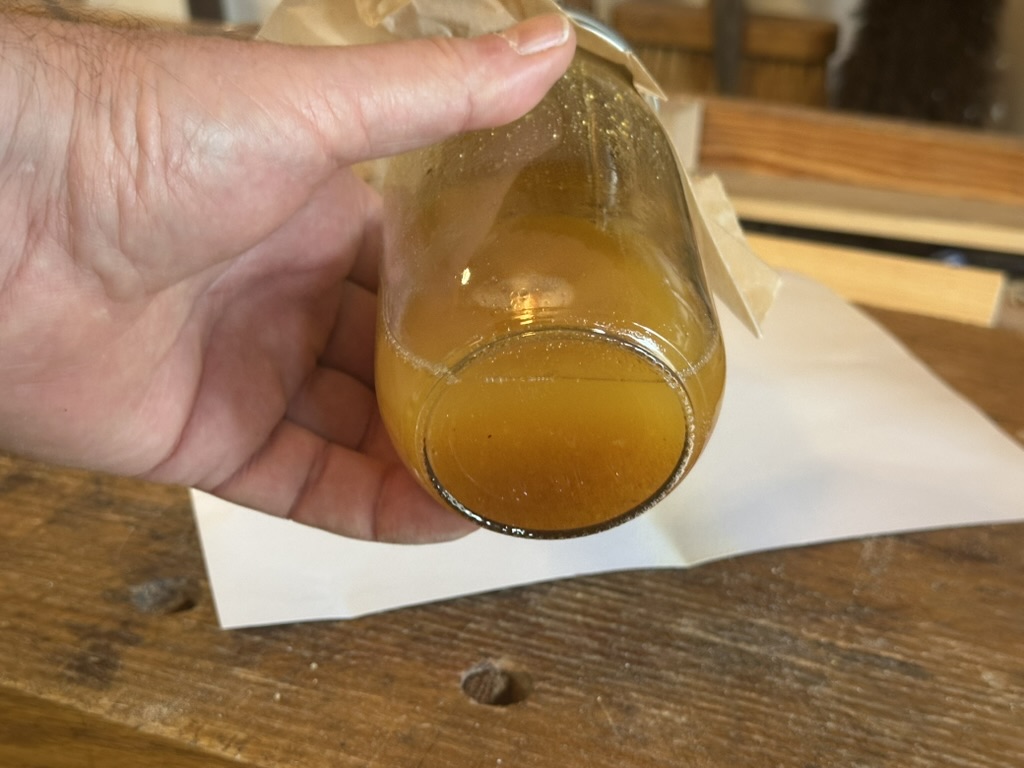
I measure the shellac by weight and the liquid by volume as seen in the photos above. I do grind the shellac flakes or buttons in a coffee grinder to aid dissolving into solution.
I measure the other additives by volume with the small amounts I’m mixing, my scale will not weight that small amounts of resin. So the most scientific way I can, I use a WAG. The one thing to remember here is you don’t have to add resins to make a good polish. I have made the investment so I do. These resins only hold in the mix In suspension and over time will settle out of the shellac. You just have to shake the mixture to re-suspend the resins. So below these are some mixing combinations that are good references.
Pound Cut Chart| Denatured Alcohol | One Pound Cut | 1.5 Pound Cut | Two Pound Cut | 2.5 Pound Cut | Three Pound Cut |
| One Gallon 128 fluid oz. | 1Lb. (16oz)flake | 1.5 Lb. (24oz) flake | 2Lb (32oz) flake | 2.5Lb (40oz) flake | 3Lb (48oz) flake |
| 1/2 Gallon 64 fluid oz. | 1/2 Lb. (8oz.) flake | 12oz. Flake | 1Lb (16oz) flake | 20 oz flake | 1.5 Lb (24oz) flake |
| One Quart 32 fluid oz. | 1/4lb. (4oz.) flake | 6oz. Flake | 1/2Lb (8oz) flake | 10 oz flake | 3/4 Lb (12oz) flake |
| One Pint 16 fluid oz. | 2oz. Flake | 3oz. Flake | 1/4Lb (4oz) flake | 5 oz flake | 6 oz flake |
| One Cup 8 fluid oz. | 1oz. Flake | 1.5oz. Flake | 2oz flake | 2.5 oz flake | 3 oz flake |
So we have talked about how to mix shellac and add resins to it. I have published a reference of mixtures of shellac. I have mentioned several publications that I truly find as invaluable knowledge. Please look them up, they cover much more than what you have read today. I remember mentioning that I find shellac a great goto finish, but why do I think that.
Well one is that it’s all natural, including the resins I use. They are natural and mined from the earth, ancient resins from root systems of trees and shrub trees. Two, this material will bond to anything and anything can bond to it. Three, you can alter the color by multiple ways. Dyes, pigments, and or it comes in several colors of it’s own. Four, it dries fairly fast, so finding dust nibs and or insects stuck in your finish does not happen very often. So with that, if you set the item to the side to work on something else it will forgive you. Five, it builds a beautiful finish with clarity that not many finishes can match. It’s as if you are looking into the wood and yet you can still feel the wood. There aren’t to many finishes that do that.
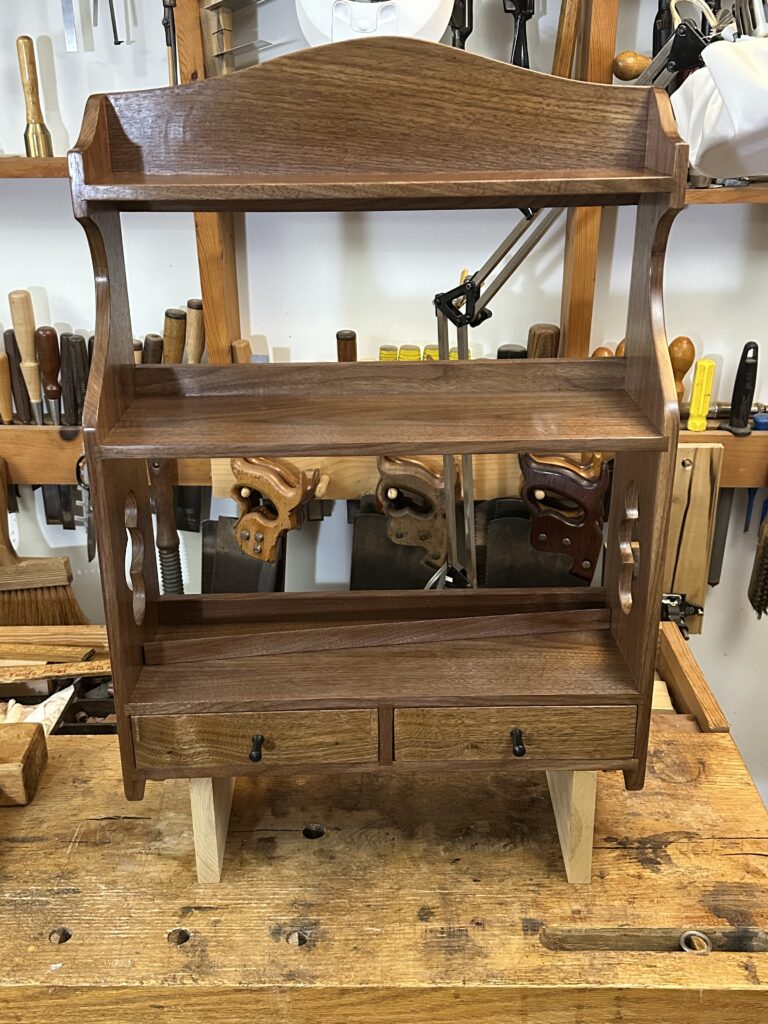
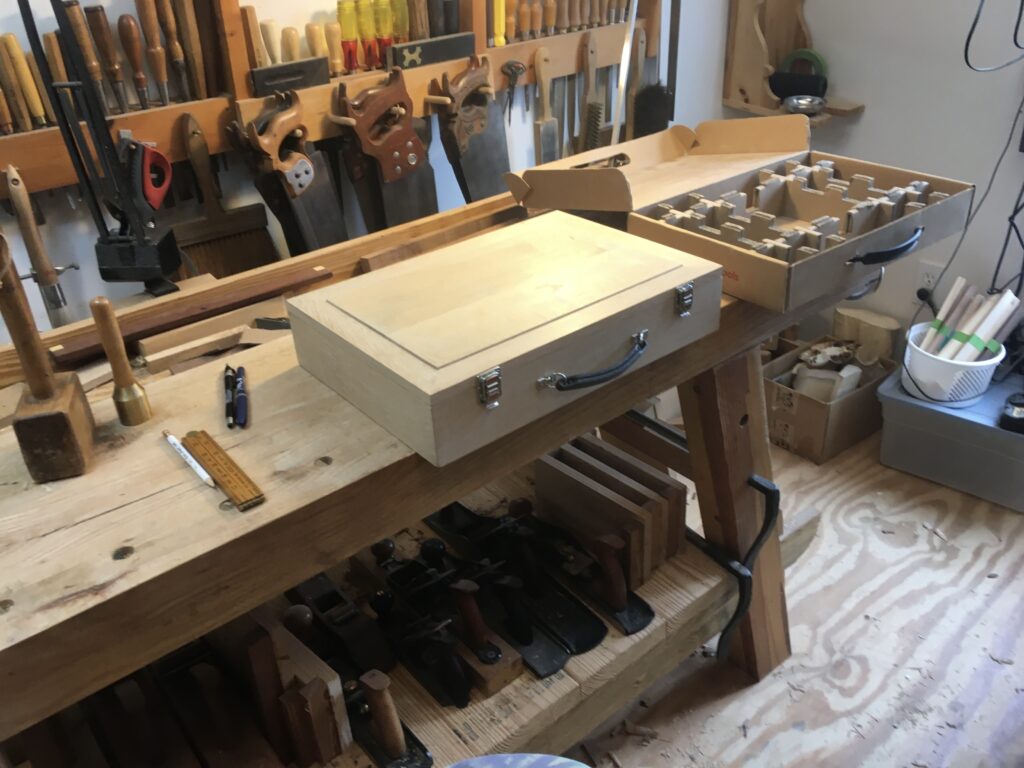
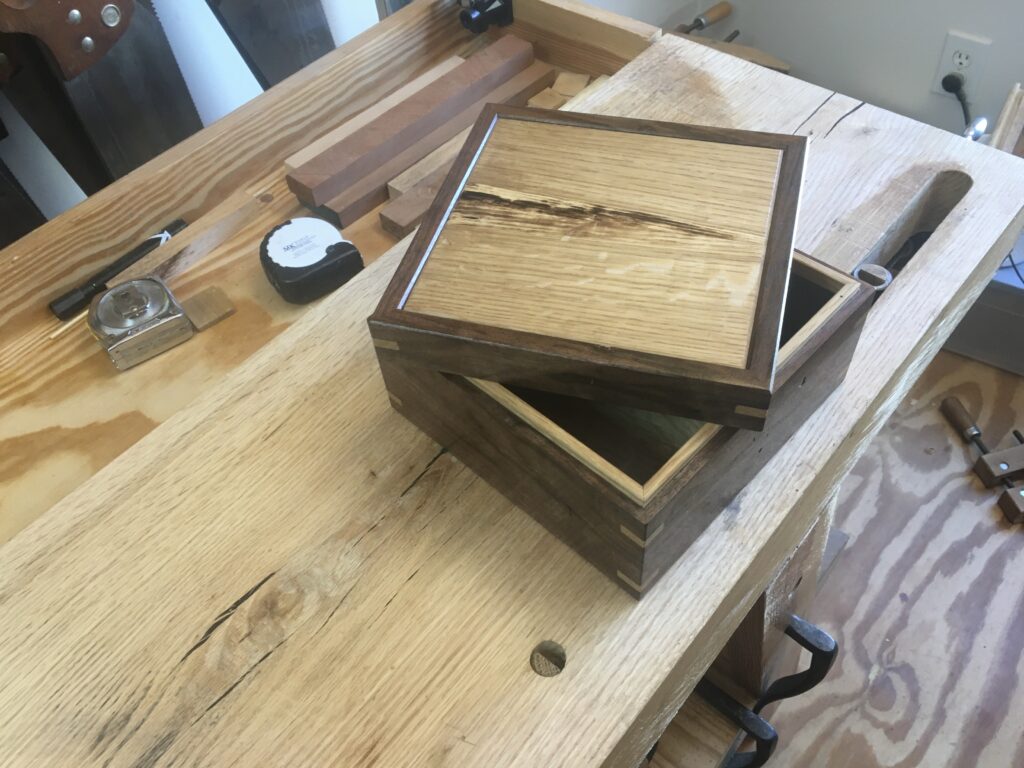
What types of projects do I use shellac or a polish on. Boxes large and small. Turnings, Saw handles, curio cabinets or any decorative shelves. Small tables side tables even dinning tables, with one caveat. I use a more durable finish on the top and the top only over the French polish. The primary reason is alcohol and the penetration of water from condensation. Those two items are the weak spot for this finish.
Hey there is no bullet proof finish so you have to pick your poison. I really enjoy the French polish process for many reasons.
There is much more to present on this subject and I would like to invite you to check out the video I linked here https://youtu.be/8oOMAOeA-Lg?is=iQMDhG3vGPasex8L or on the media page about the applicator and the application of this material. I will present more on this subject and others in the coming weeks and months. So please if you have any questions or comments feel free to share with us and I’ll attempt to answer any and all. Thanks for joining us today and we will hopefully see you soon.